
News Desk · Everything Space
New wave of Mars missions from Japan, Europe, China and NASA set to launch this decade
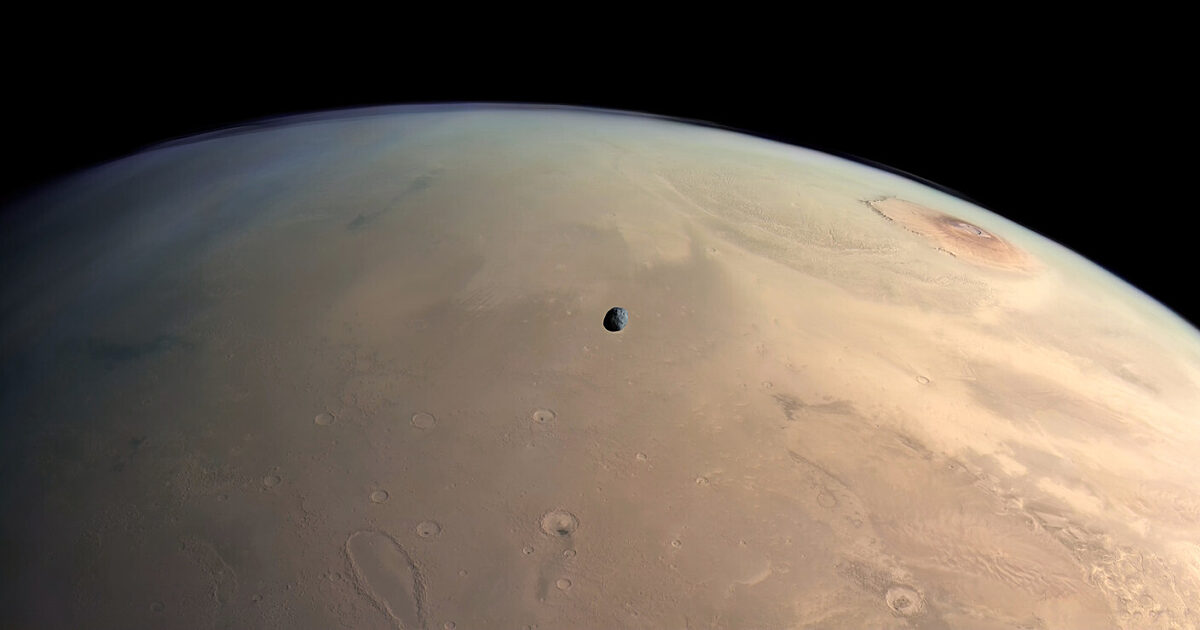
Image: The Planetary Society
International probes aim to sample a Martian moon, drill deeper than ever for life signs, and scout landing sites for future astronauts.
A cluster of new Mars missions from multiple space agencies is poised to reshape exploration of the red planet over the next five years, shifting some scientific leadership away from NASA even as the agency pursues its own projects tied more closely to future human landings.
Japan's Martian Moons eXploration mission, backed by contributions from NASA, France and Germany, could launch as soon as November. It aims to study Phobos in detail, deploy a small rover, and collect regolith samples to return to Earth, potentially resolving whether Phobos is a captured asteroid or debris from Mars' formation.
Europe's long-delayed ExoMars Rosalind Franklin rover, now carrying NASA-provided hardware and a 2028 launch contract, will target Oxia Planum, a clay-rich region thought to have once fed an ancient ocean. The rover is designed to drill up to two meters into the surface, far deeper than any previous Mars mission, in search of preserved biosignatures.
China's CNSA is separately developing Tianwen-3, aiming to attempt a sample-return mission from the Martian surface by 2030, though the effort is still early in construction and details remain limited.
Meanwhile, NASA's own upcoming Mars efforts, including a nuclear-powered spacecraft concept, small helicopters meant to scout human landing sites, an orbital communications network, and a low-cost commercial smallsat mission, are oriented more toward supporting eventual astronaut missions and commercial capability than fundamental science, a departure some in the science community have criticized for lacking the usual peer-reviewed selection process.
Taken together, these missions reflect a broader trend of Mars exploration becoming a shared international effort rather than one dominated by a single agency, with sample-return science, moon studies, and life-detection experiments distributed across multiple national programs.
Sources
Written in Everything Space’s own words by our news-desk model from the sources above, and checked against them in code: every number in this report appears in its sources, and no sentence is copied from them.