
News Desk · Everything Space
NASA's Roman Space Telescope nears launch with dual instruments for cosmology and exoplanets
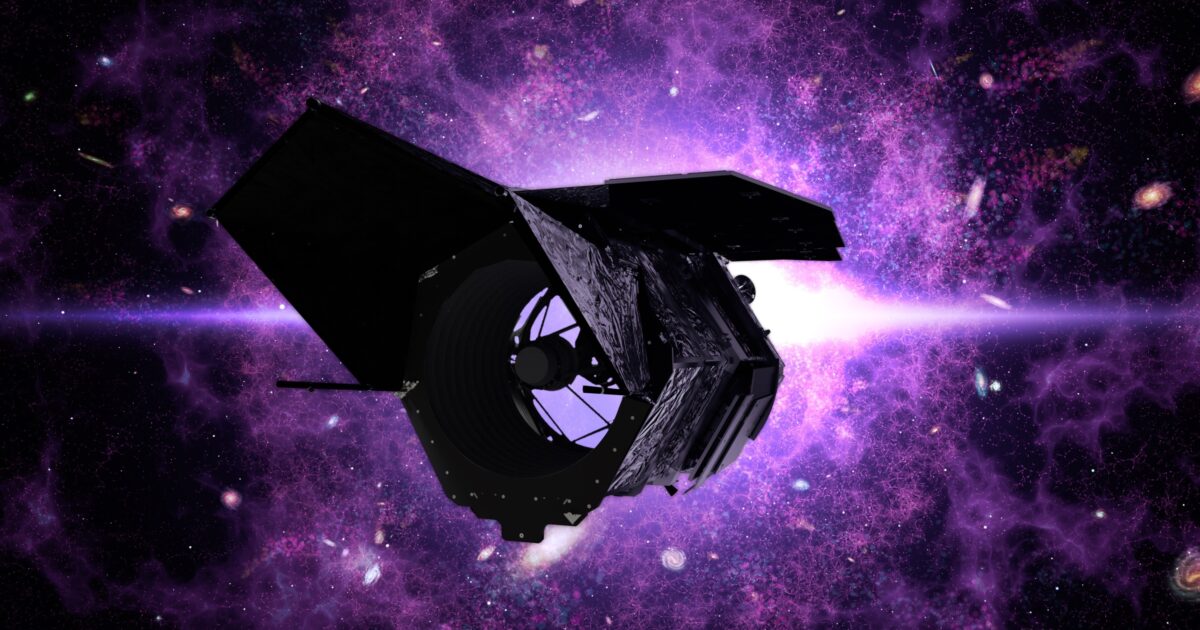
Image: The Planetary Society
The flagship telescope aims to survey dark energy, map the Milky Way, and pioneer exoplanet-imaging technology ahead of a planned 2026 launch.
NASA's Nancy Grace Roman Space Telescope, named for the agency's first chief of astronomy, is approaching its launch window, which opens in August 2026 after being moved earlier by more than half a year. The mission has stayed on budget and on schedule, according to a project scientist involved in its development.
Roman carries a 2.4-meter mirror, the same size as Hubble's, but its power comes from two instruments rather than mirror size. The Wide Field Instrument captures optical and near-infrared images with 300 million pixels, covering roughly 100 times more sky than Hubble or Webb cameras. A second instrument, the Roman Coronagraph, is built to block starlight so nearby exoplanets can be imaged directly, using deformable mirrors and single-photon-counting detectors.
Positioned at the Earth-Sun L2 point about 1.5 million kilometers away, Roman will maintain thermal stability and near-continuous observing time, making it roughly 1,000 times faster than Hubble at surveying the sky and over 100 times better at spotting faint exoplanets.
A central goal is probing dark energy through three methods: gravitational lensing, galaxy clustering, and supernova-based distance measurements, complementing other missions studying the same mystery. Roman will also survey the Milky Way's crowded galactic center and study debris disks around nearby stars.
Beyond surveys, Roman is expected to detect planets using microlensing, a technique that can reveal smaller and more distant worlds, including rogue planets not bound to any star. Combined with transit detections, the telescope could find more than 100,000 exoplanets, vastly expanding the roughly 6,000 currently known.
The coronagraph instrument will attempt the first reflected-light images of cold, Jupiter-like planets around sunlike stars, serving as a technology testbed for the future Habitable Worlds Observatory, which would search for signs of life on Earth-like planets.
A quarter of Roman's observing time will go to surveys chosen by the global astronomy community, and its data will be made publicly available as soon as it is processed.
Sources
An insider's look at the Nancy Grace Roman Space Telescope
Written in Everything Space’s own words by our news-desk model from the sources above, and checked against them in code: every number in this report appears in its sources, and no sentence is copied from them.