
News Desk · Everything Space
NASA selects PRIMA far-infrared telescope as its first Probe Explorers mission
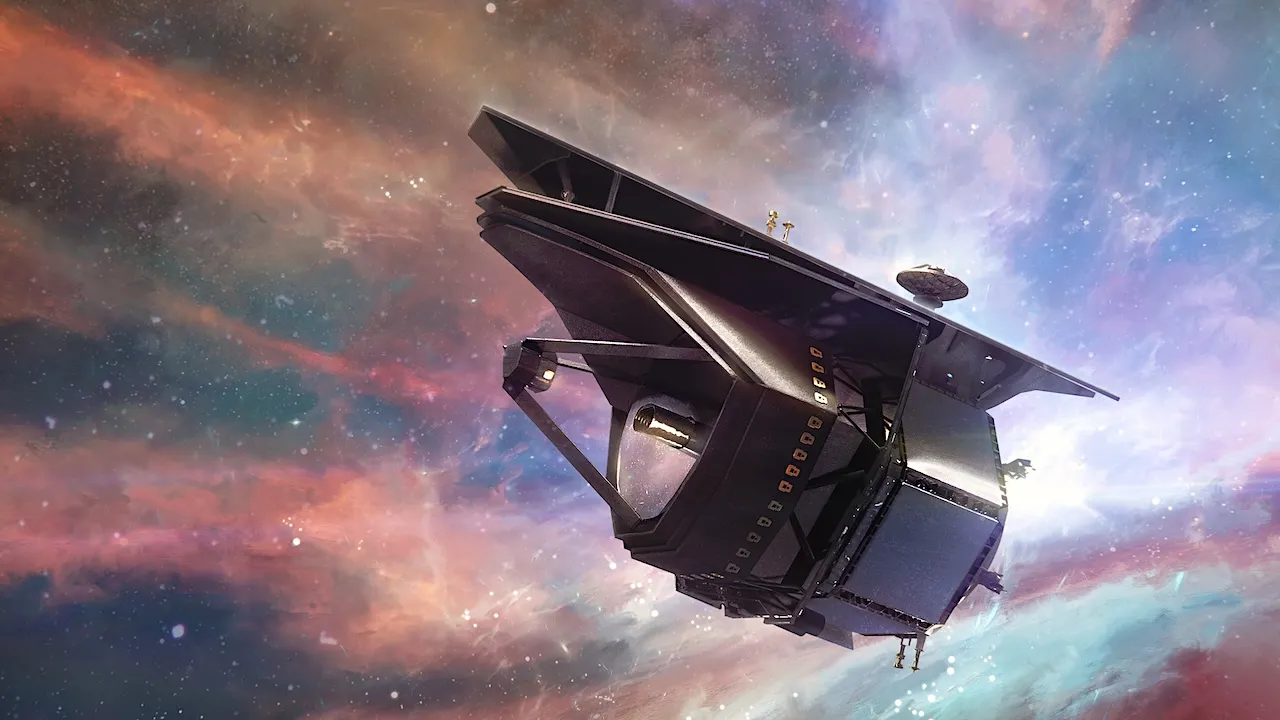
Image: Universe Today
The 1.8-meter observatory will study galaxy and black hole evolution, planet formation, and cosmic dust, filling a gap between Webb and radio telescopes.
NASA has chosen the PRobe far-Infrared Mission for Astrophysics, or PRIMA, as the first mission in its newly created Probe Explorers class, advancing the project into its next development phase. The selection falls under the agency's long-running Explorers Program, which focuses on astrophysics and heliophysics missions.
The Probe Explorers category was created in response to recommendations from the 2020 Astro2020 decadal survey. NASA says PRIMA was chosen after reviewing competing concept studies based on how well they matched the survey's science priorities, their cost and schedule feasibility, and their potential to mature technology useful for larger future missions.
PRIMA will carry a 1.8-meter telescope designed to perform deep surveys in far-infrared light, a wavelength range last explored in depth by the European Space Agency's Herschel Observatory, which operated for several years before being retired. The mission is intended to bridge the observational gap between infrared telescopes like Webb and radio observatories.
Scientific goals include studying how planets form outside the Solar System, tracing the growth of galaxies alongside their central supermassive black holes, and examining how dust and heavy elements have built up over cosmic history. NASA officials describe the mission as complementing other flagship observatories by extending survey coverage into far-infrared wavelengths.
The mission now enters Phase B, during which the spacecraft's preliminary design and required technologies will be developed further. After a confirmation review evaluating its capability, cost, and readiness, PRIMA would proceed to Phase C with a cost cap of $1.2 billion, excluding launch expenses. If all phases are completed on schedule, the mission is targeting a launch in 2033.
Management responsibilities will be shared among NASA's Jet Propulsion Laboratory, Goddard Space Flight Center, and Marshall Space Flight Center, with international contributions expected from space agencies in the United Kingdom, France, Italy, Germany, Canada, South Korea, and Japan.
Sources
NASA's First Selection for a New Class of Mission: The PRIMA Far-Infrared Telescope
Written in Everything Space’s own words by our news-desk model from the sources above, and checked against them in code: every number in this report appears in its sources, and no sentence is copied from them.