
News Desk · Everything Space
NASA launches new strategy review to rescue Mars Sample Return program
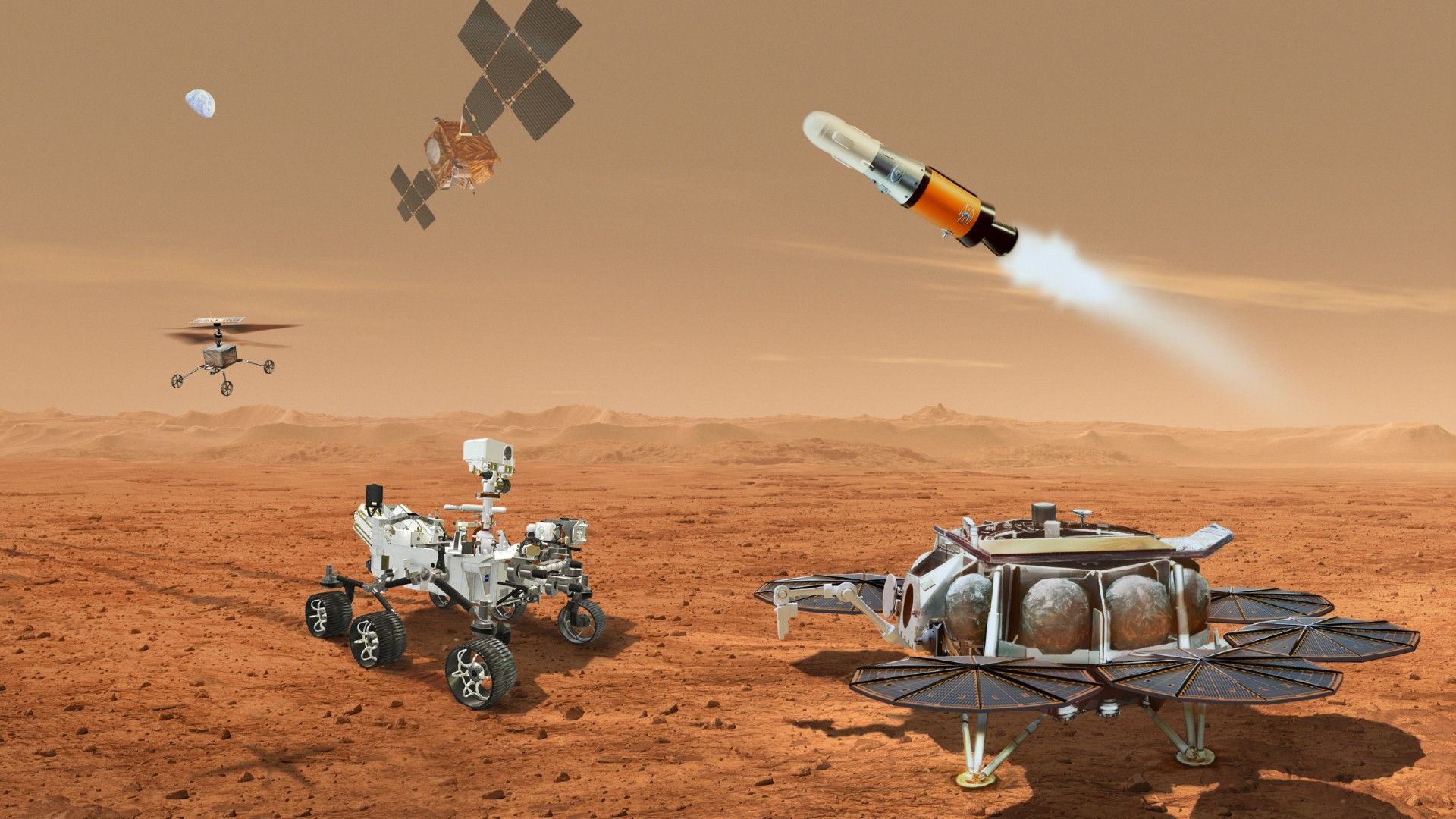
Image: Space.com
The agency's fresh planning effort, dubbed PSRA, aims to find a workable way to bring Perseverance's Mars samples to Earth after earlier plans proved too costly and slow.
NASA has begun a new planning effort called the Perseverance Sample Retrieval Architecture, or PSRA, intended to chart a revised strategy for collecting samples gathered by the Perseverance rover and returning them to Earth. The initiative was disclosed by Tiffany Morgan, director of NASA's Mars Exploration Program, during a virtual meeting of the Mars Exploration Program Analysis Group.
According to Morgan, a PSRA strategy team will formally begin its work in January 2027, with a final report expected by the winter of 2027-2028. The effort follows years of difficulty in finalizing a workable approach for NASA's broader Mars Sample Return program.
Perseverance has been operating in Jezero Crater since landing in February 2021, collecting and sealing samples that it either leaves on the Martian surface or stores aboard the rover. Scientists hope these samples could contain evidence of past life on Mars.
Previous cost estimates for retrieving the samples alarmed NASA. One assessment put the price near $11 billion, with Earth return not happening until 2040, which the agency deemed too expensive and too slow. A separate evaluation suggested a less expensive approach, near $8 billion, could return samples by 2035. It remains unclear how the new PSRA effort will address these cost and schedule challenges.
Discussion at the same meeting also touched on why sample return matters ahead of future human missions to Mars. Bruce Jakosky, a researcher affiliated with the University of Colorado Boulder and the University of Washington, argued for closer integration between sample return planning and human mission planning, noting that returned samples could help scientists understand hazards astronauts might face, such as toxic soil compounds and dust exposure.
Adding pressure to NASA's renewed effort is China's progress on its own Tianwen-3 Mars Sample Return mission. The mission, which involves a lander, ascent vehicle, service capsule, orbiter and Earth reentry module, is expected to launch around 2028 using two heavy-lift rockets, with samples potentially returned to Earth by 2031.
Sources
Written in Everything Space’s own words by our news-desk model from the sources above, and checked against them in code: every number in this report appears in its sources, and no sentence is copied from them.