
News Desk · Everything Space
Jupiter's gravity could boost Perseid meteor rates in 2028, meteor expert says
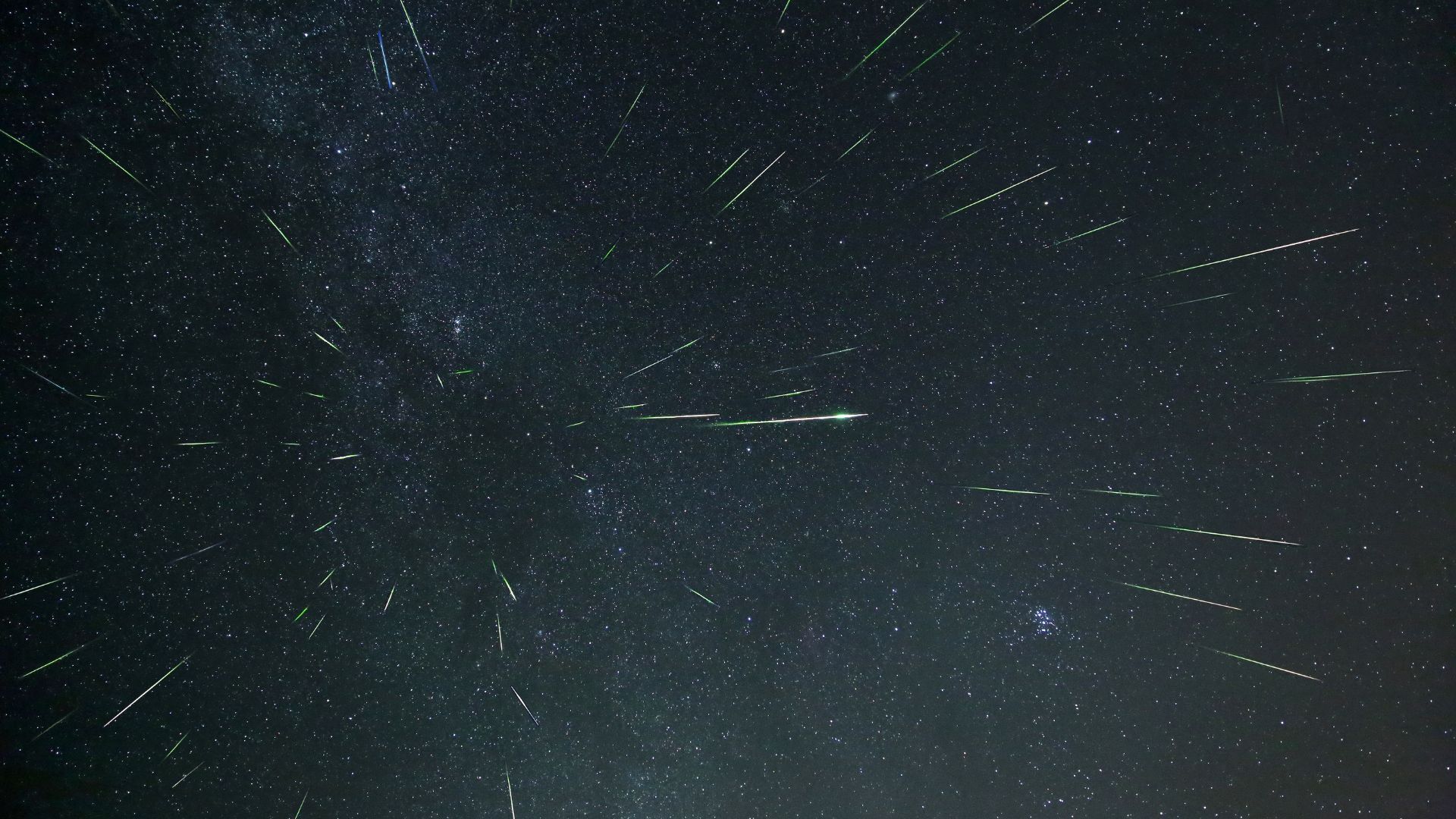
Image: Space.com
The gas giant nudges debris from Comet 109P/Swift-Tuttle every 12 years, and the next pass may steer more particles onto a collision course with Earth.
The Perseid meteor shower could deliver a stronger-than-usual display in 2028, when Jupiter's gravity is expected to shift part of the debris stream shed by Comet 109P/Swift-Tuttle closer to Earth's orbit.
Robert Lunsford of the American Meteor Society told Space.com that Jupiter passes near a portion of the Swift-Tuttle particle stream roughly once every 12 years, and that the geometry and timing of each encounter determine whether the debris ends up nearer to or farther from Earth. The 2028 passage points toward some particles moving into orbits closer to our planet, which could push hourly meteor counts above normal levels.
The Perseids appear each year as Earth crosses the trail of dust left behind by Swift-Tuttle. Many of the grains are no bigger than a sand particle, yet they strike the atmosphere at about 37 miles (59 kilometers) per second, bright enough to be seen without a telescope as they are destroyed.
Any forecast comes with large uncertainties. Lunsford noted that computer models cannot account for how densely packed the particles are within the stream, where individual grains can be separated by hundreds or thousands of miles, so predicted rates should be treated as informed estimates. He said the 2027 shower will serve as a test case: if rates that year reach at least 100 meteors per hour, 200 to 300 per hour could follow in 2028.
Moonlight will shape how much observers actually see. In 2027 the peak falls under a waxing moon four days from full, though the moon sets before dawn, opening a window of dark sky. In 2028, the shower peaks around Aug. 12-13 with a third quarter moon rising after midnight and remaining up until sunrise, which Lunsford described as far better than a full moon, though the faintest meteors may still be lost in less-than-transparent skies.
Lunsford placed the expected periods of greatest intensity between 23:00 and 00:00 UT on Aug. 13-14, 2027, and between 5:00 and 6:00 UT on Aug. 12, 2028. Viewing before moonrise in 2028 is possible, he said, but the shower's radiant would sit low in the sky.
Sources
Written in Everything Space’s own words by our news-desk model from the sources above, and checked against them in code: every number in this report appears in its sources, and no sentence is copied from them.