
News Desk · Everything Space
Conestoga 1 became the first privately funded rocket to reach space in 1982
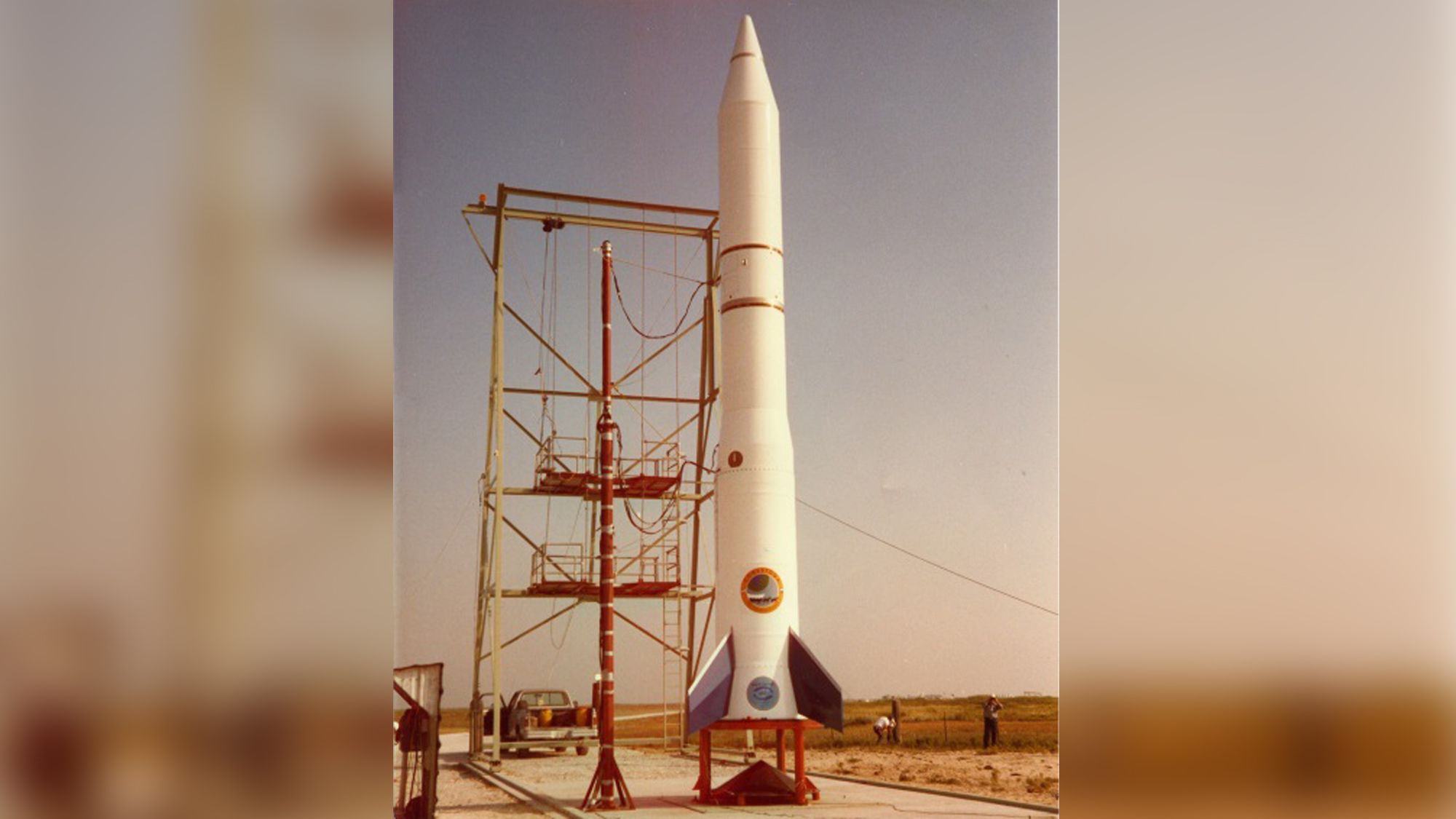
Image: Space.com
The Texas ranch launch marked the start of commercial rocketry decades before companies like SpaceX dominated the industry.
On September 9, 1982, a rocket called Conestoga 1 lifted off from a private launch site on Matagorda Island, Texas, marking the first time a privately funded rocket reached space. The 36-foot vehicle was built by Space Services Inc. of America using spare rocket parts, including a repurposed Minuteman missile stage bought from NASA.
The rocket flew for about 10 and a half minutes and reached an altitude of 195 miles. Its only payload was 40 gallons of water, released at peak altitude simply to give ground crews a visible marker rather than to gather scientific data.
At the time, spaceflight was dominated by government agencies such as NASA and the military, making the flight notable as an early example of private industry entering the launch business. Space Services Inc. of America was led by former astronaut Deke Slayton along with entrepreneurs Charles Chafer and David Hannah Jr., and the company had raised funding from dozens of private supporters after an earlier rocket design failed during a 1981 launch attempt.
Following Conestoga 1, the company launched another suborbital rocket carrying science experiments in 1989. A later attempt to launch a larger version of the rocket, with additional boosters, failed shortly after liftoff from a NASA facility in Virginia in 1995.
The company's legacy continues today through a subsidiary that arranges memorial spaceflights carrying human remains on commercial rockets. More broadly, the 1982 flight is remembered as an early step toward today's commercial launch industry, which now includes companies flying private astronauts and operating some of the largest rockets ever built.
Sources
Written in Everything Space’s own words by our news-desk model from the sources above, and checked against them in code: every number in this report appears in its sources, and no sentence is copied from them.