
Skip to content
EVERYTHINGSPACE

NASA · Thu, 01 Oct 2026 16:58:10 GMT

What’s Up: October 2026 Skywatching Tips from NASA
What’s Up: October 2026 Skywatching Tips from NASA

2 min read · reported by NASA

Contents

A Meteor Shower and the Moon Near the Pleiades

See Saturn at opposition, catch the Orionid meteor shower, and watch the Moon pass close to the Pleiades, also known as the Seven Sisters.

Skywatching Highlights
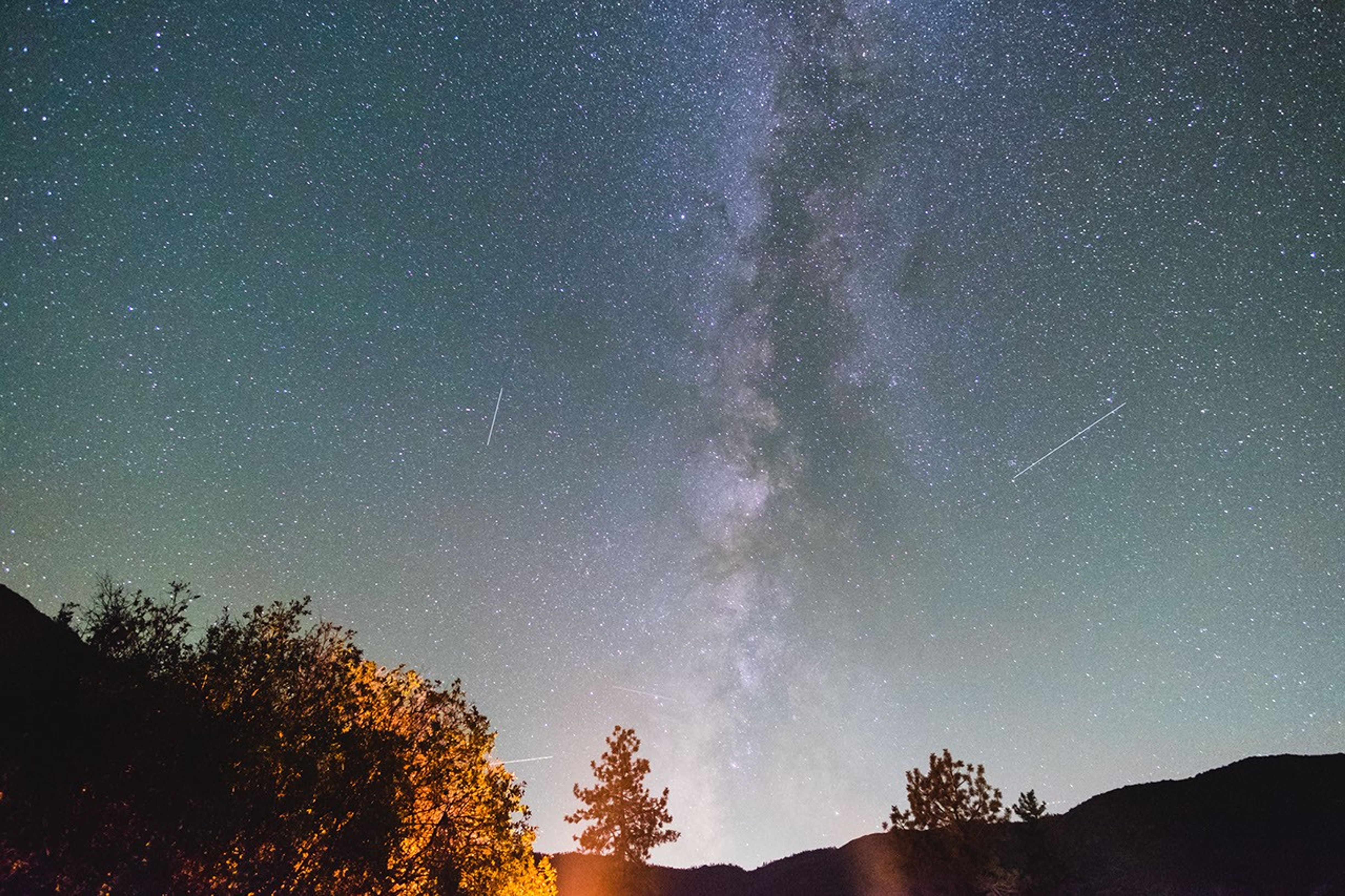
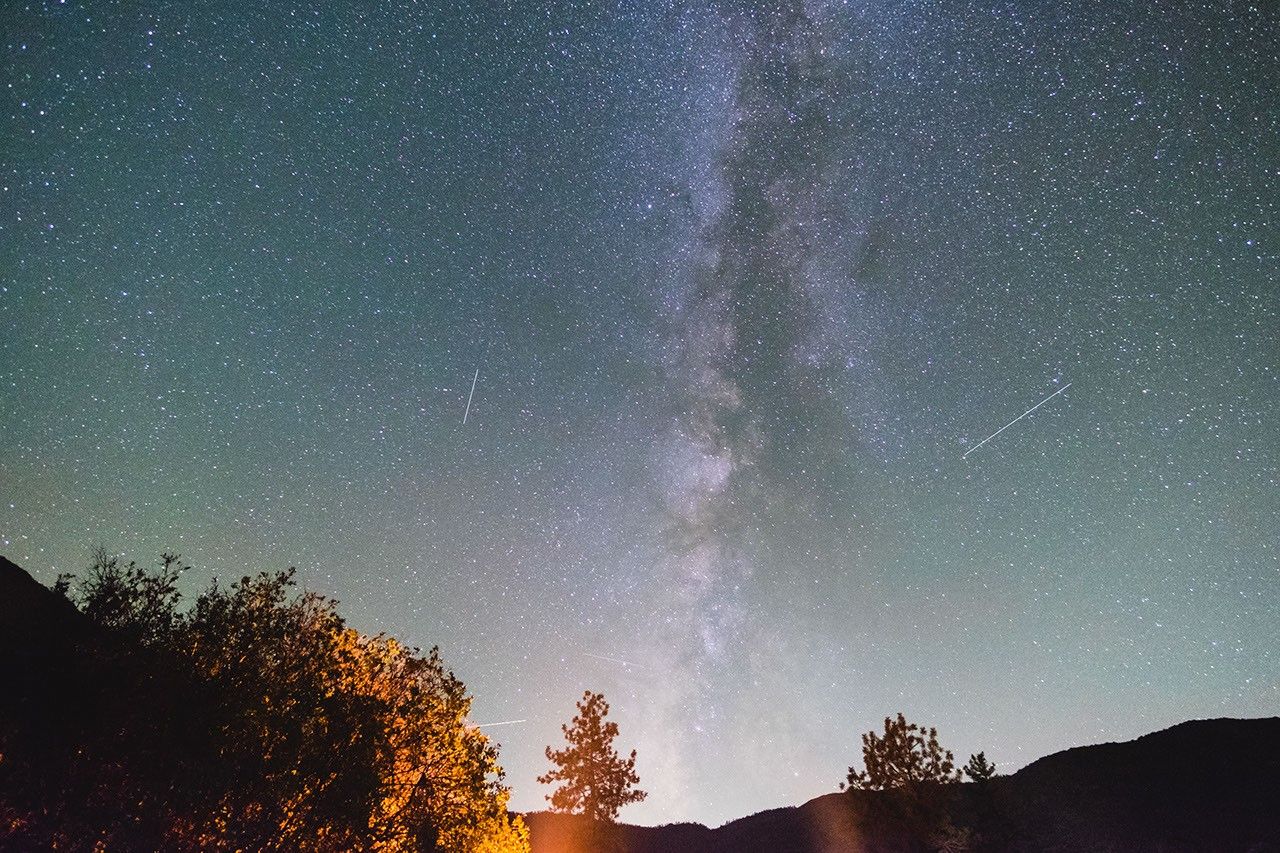
A long-exposure photograph of a clear night sky filled with countless stars, featuring the bright, dust-filled band of the Milky Way galaxy stretching vertically through the center. Faint streaks of light from meteors are visible across the sky. Along the bottom, dark silhouettes of trees and distant mountain ridges frame the horizon, with warm light glowing softly behind the foliage on the lower left.

Transcript

Saturn takes center stage, a meteor shower lights up the sky, and the Moon visits the Seven Sisters. That's What's Up for October.
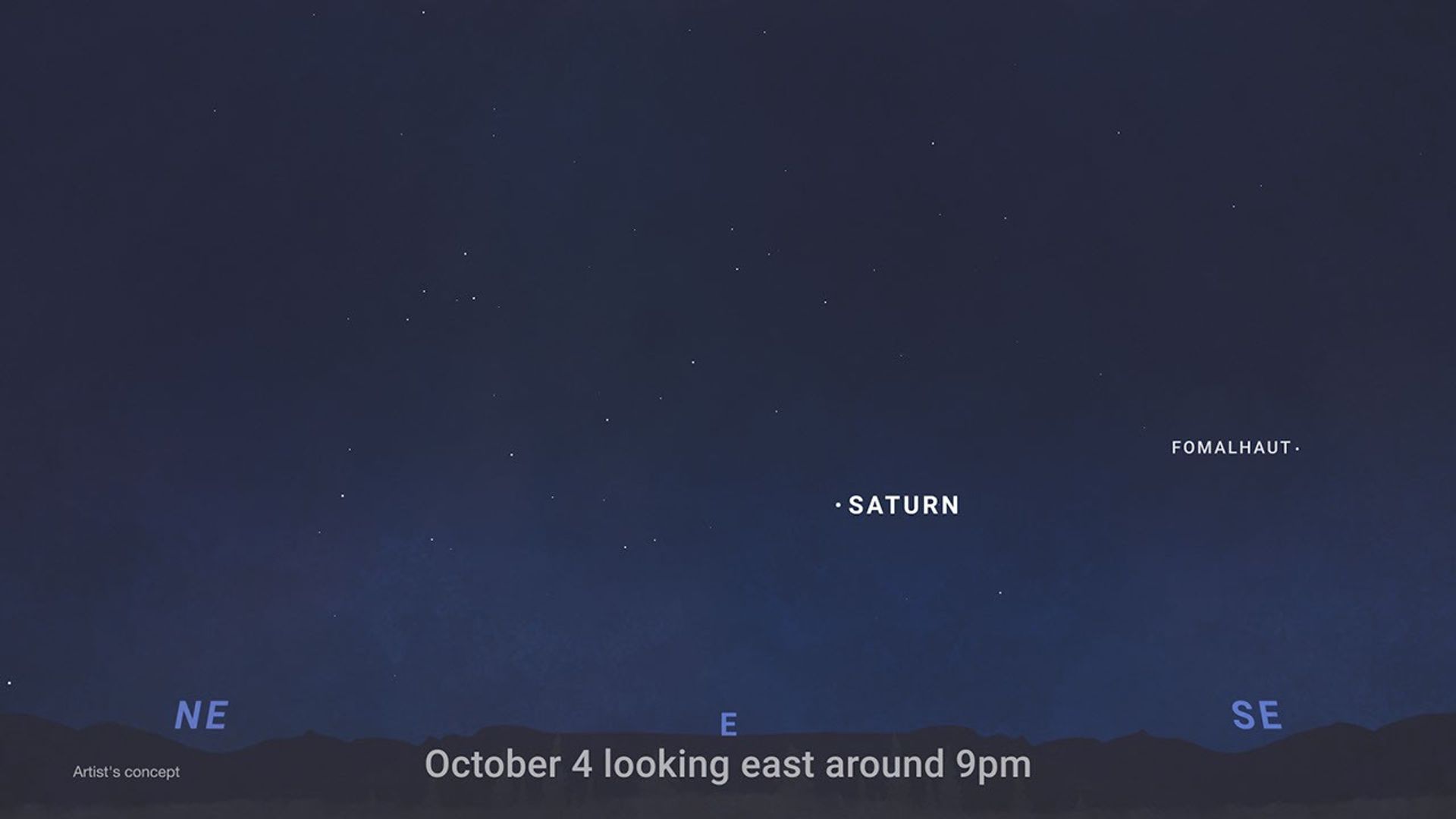
A night sky chart labeled "October 4 looking east around 9pm" above a dark horizon line. The planet Saturn is highlighted in the center above the eastern horizon, with the bright star Fomalhaut visible further to the southeast.

On October 4th, Saturn reaches opposition, giving skywatchers one of the year's best opportunities to see the ringed planet. Opposition happens when Earth passes between the Sun and Saturn. That puts Saturn opposite the Sun in our sky, so it rises around sunset and stays visible for much of the night.

Astronomers have long known about a hexagon-shaped jet stream that spans nearly 20,000 miles across Saturn's north pole. But just last month, observations using NASA's Hubble Space Telescope revealed a ten-sided atmospheric wave encircling the planet's south pole. This southern hemisphere feature appears to be strengthening, giving scientists the rare opportunity to watch a giant atmospheric pattern develop.
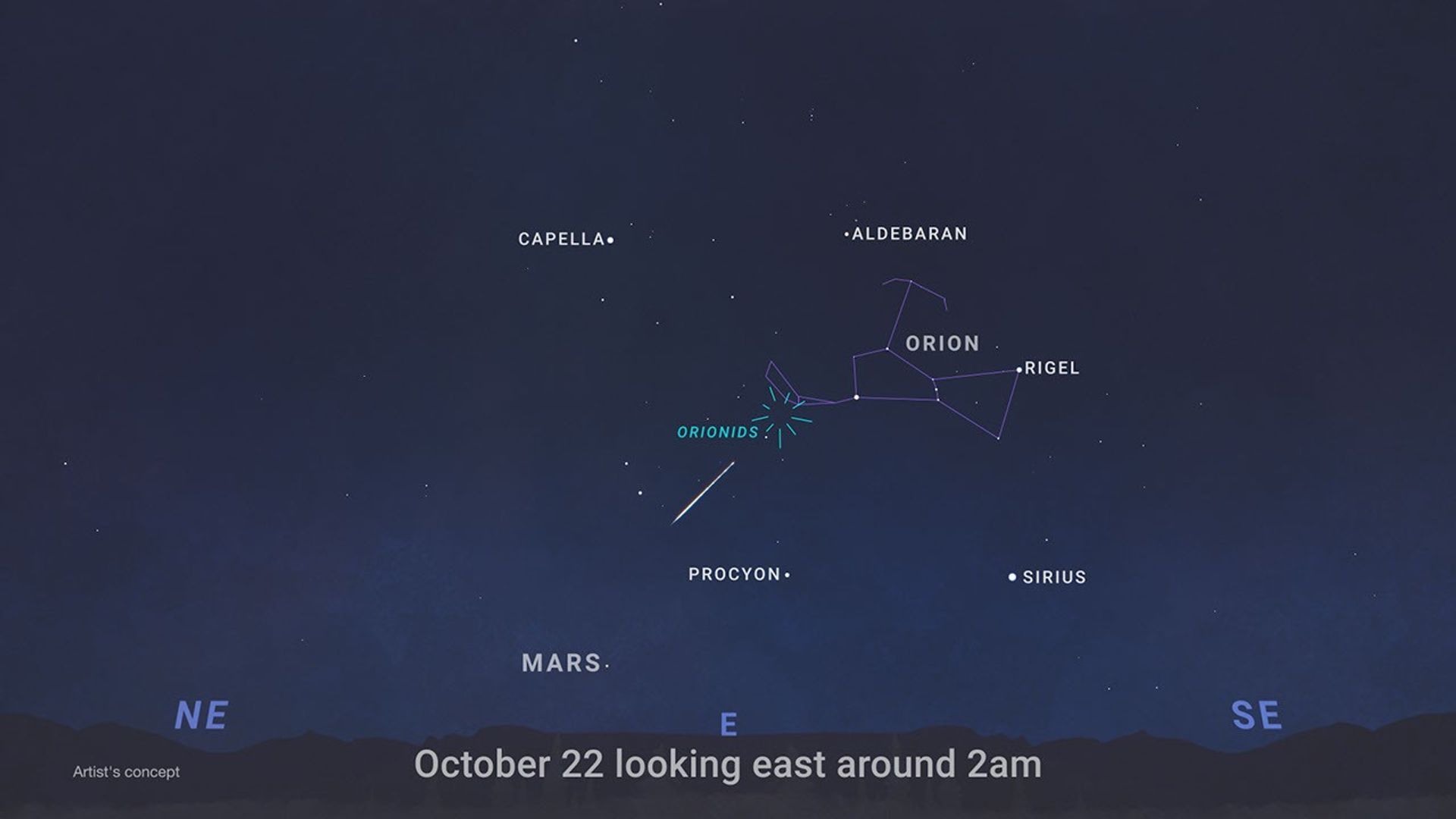
A dark night sky chart labeled "October 22 looking east around 2am" along the bottom horizon. In the center, the constellation Orion is outlined in purple, with a burst icon pointing to the radiant point for the Orionids meteor shower. Surrounding labeled celestial objects include Capella, Aldebaran, Rigel, Procyon, Sirius, and Mars.

The Orionid meteor shower peaks on the night of October 21st into the morning of October 22nd. The Orionids are created by tiny pieces of debris left behind by Halley's Comet . They appear to radiate from the direction of Orion, but the meteors can streak across any part of the sky. A bright waxing gibbous Moon will wash out some of the fainter meteors this year. Your best chance may come in just a few hours before dawn, after the Moon sets. Find a dark location. Give your eyes time to adjust and look up.
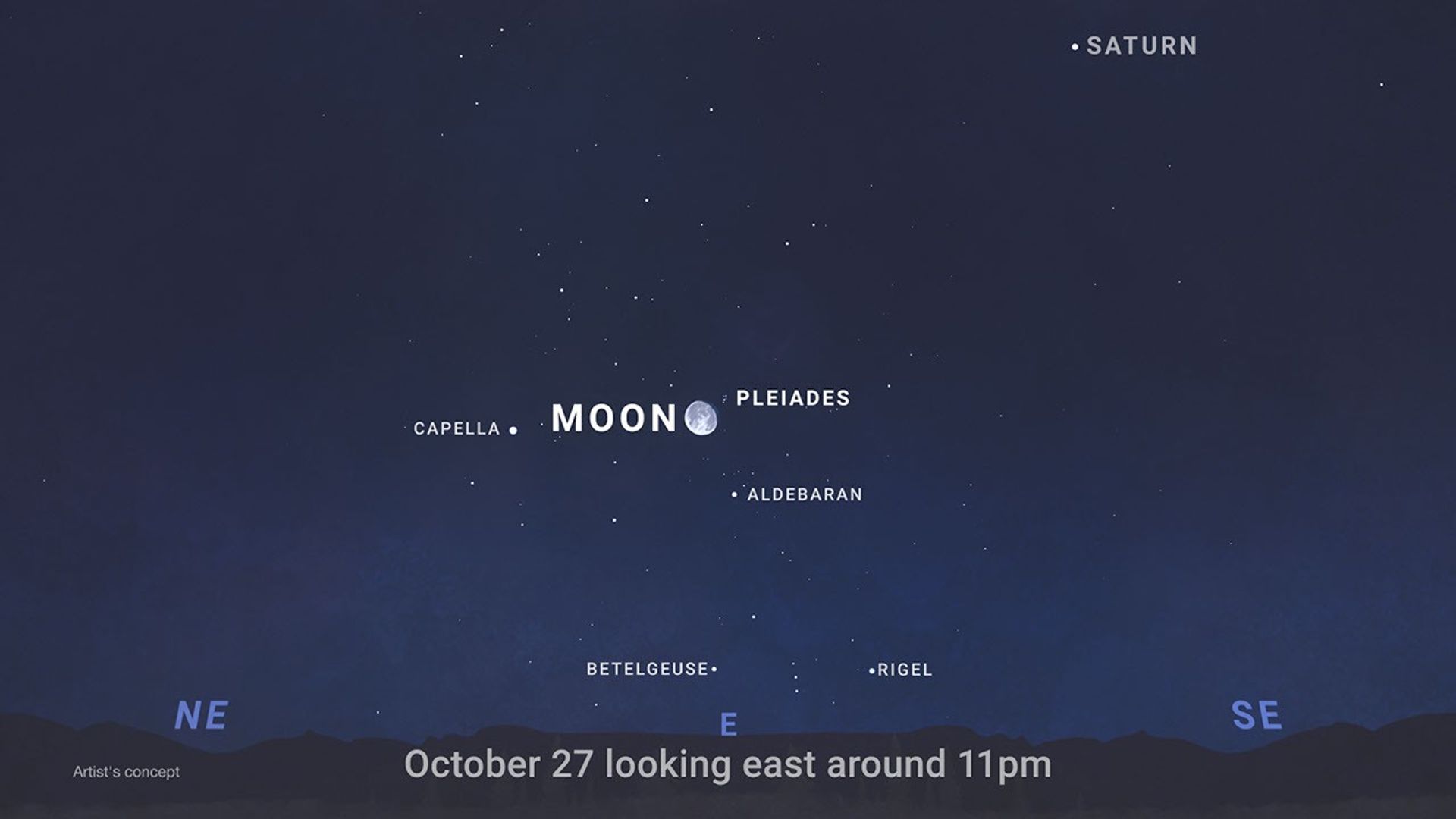
A night sky chart labeled "October 27 looking east around 11pm" along the bottom horizon. Near the center, a bright gibbous Moon sits directly next to the Pleiades star cluster. Labeled surrounding stars and planets include Capella, Aldebaran, Betelgeuse, Rigel, and Saturn higher in the sky.

On the night of October 27th into the 28th, look for the Moon passing close to a famous star cluster called the Pleiades, also known as the Seven Sisters. Many ancient cultures had stories associated with the Pleiades, due in part to the fact that the star cluster is visible from almost everywhere on the globe.

To spot them yourself, look east in the evening as the Moon and cluster climb higher into the night sky. The Pleiades appear as a slightly fuzzy grouping of 6 to 7 stars. They are visible to the unaided eye, but binoculars or a telescope reveal more spectacular detail.

Here are the phases of the Moon for October.
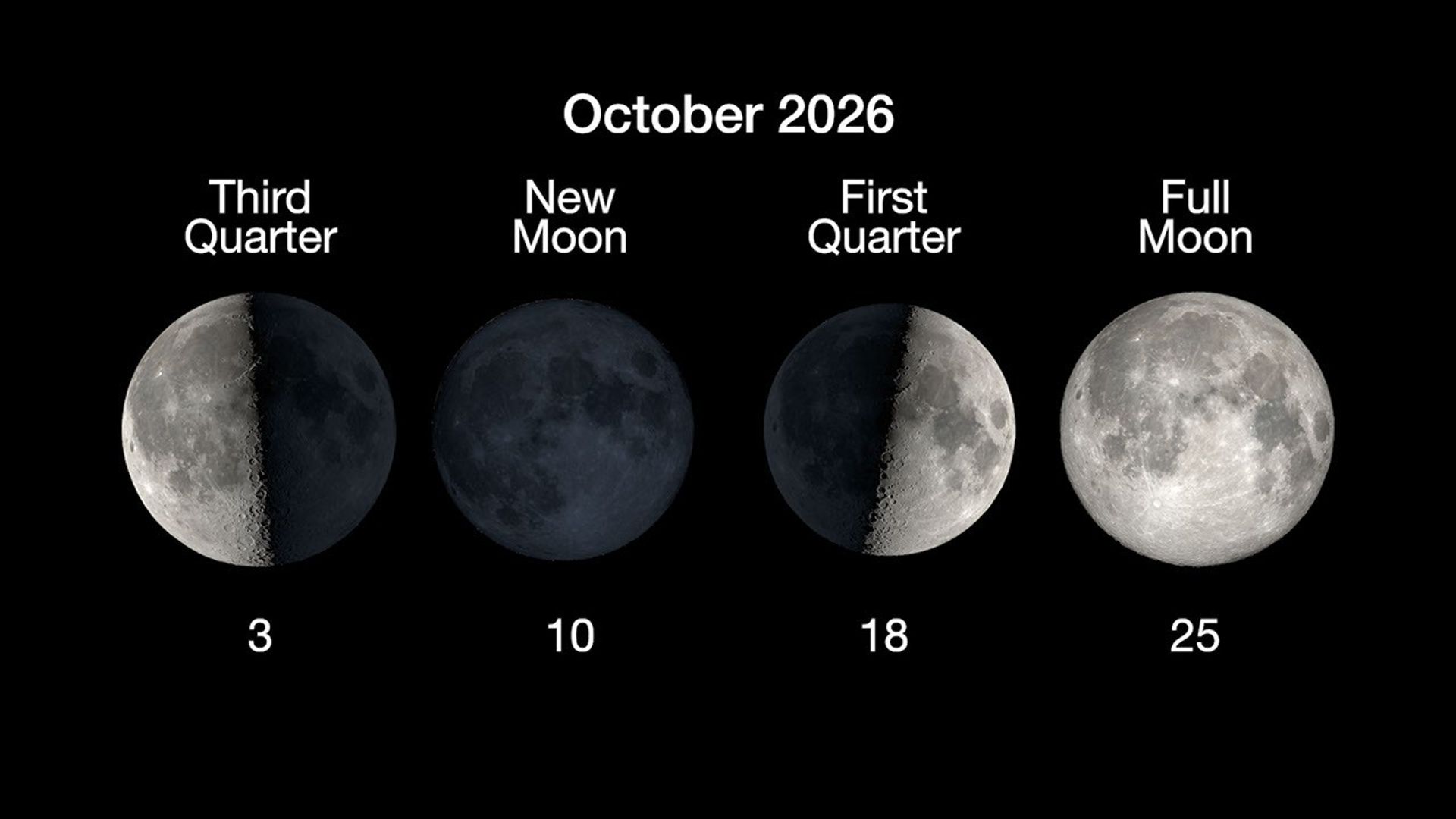
An image titled "October 2026" on a black background showing four main moon phases and their corresponding calendar dates:  Third Quarter: October 3 (left half of the moon illuminated)  New Moon: October 10 (nearly completely dark sphere)  First Quarter: October 18 (right half of the moon illuminated)  Full Moon: October 25 (fully illuminated moon)
An image titled "October 2026" on a black background showing four main moon phases and their corresponding calendar dates: Third Quarter: October 3 (left half of the moon illuminated) New Moon: October 10 (nearly completely dark sphere) First Quarter: October 18 (right half of the moon illuminated) Full Moon: October 25 (fully illuminated moon)

You can stay up to date on all of NASA's missions exploring the solar system and beyond at NASA Science .

I'm Raquel Villanueva from NASA's Jet Propulsion Laboratory and that's What's Up this month.

Learn More and Get Involved

Night Sky Network

The Night Sky Network is a nationwide coalition of amateur astronomy clubs bringing the science, technology, and inspiration of NASA's missions to the general public.
The Milky Way spreads across a twilight sky over a desert landscape.

NASA Skywatching Resources

Expert skywatching tips and more from our experts.

Published by NASA. NASA content is not subject to copyright; NASA does not endorse Everything Space. View the original →

What do you make of it?

Nobody has weighed in on this story yet.

Related in the Atlas

NASA · organizationSaturn · planet