
Arstechnica · Wed, 30 Sep 2026 16:48:56 GMT
So what's happening with Russia's new, long-delayed crewed spacecraft?
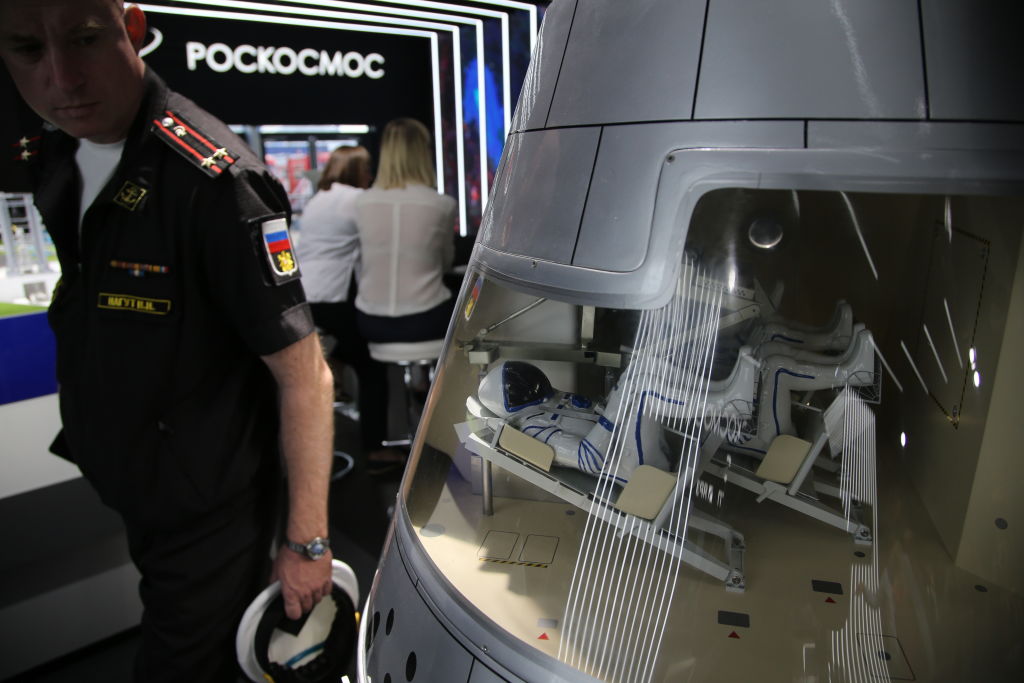
In what seems like an alternate universe in hindsight, Russia and the European Space Agency began discussing collaboration on next-generation crewed spacecraft two decades ago. Under the agreement , Europe would have provided a service module to power a crew capsule carrying up to six passengers.
Europe ultimately decided not to pursue a crewed spacecraft project at the time, and Russia’s state-backed space corporation, Roscosmos, chose to move ahead with a crewed spacecraft on its own. This project—always seemingly more of a Potemkin village than an effort encompassing real hardware—has gone under various guises over the years:
Actual hardware tests, maybe?
Beyond the name changes and a flood of renderings, after nearly 20 years of work, then, is anything actually happening with the Eagle spacecraft?
For starters, the relatively new chief executive of Roscosmos, Dmitry Bakanov, appears to have jettisoned the “Eagle” name of the spacecraft favored by Rogozin. In a recently published Interfax story , the spacecraft is referred to as PTK NP.
Bakanov, in comments translated for Ars by Rob Mitchell, told the publication that tests of the spacecraft’s parachute system will begin this fall.
“The first step is the launch and testing of a new, promising, reusable manned transport spacecraft,” he said. “And in the fall, there will be a parachute drop and testing in the Far East.”
According to the publication, the spacecraft will also “undergo tests in emergency rescue modes during an emergency at the launch pad” later this year, and in 2027, tests will occur “in the zone of maximum dynamic pressures.”
Aspirational launch dates
It’s not clear from the report whether these tests will involve real flight hardware, boilerplate vehicles, or mockups. However, the reference to the “zone of maximum dynamic pressures” presumably refers to Max-Q and suggests that some kind of launch abort test will occur. This would be a significant step toward a spaceflight.
The article also says Russian space officials are currently holding to a debut crewed launch of the spacecraft in 2028 or 2029, likely on the Angara A5M rocket. This is probably not a date to write down in ink just yet. Four years ago, Russian President Vladimir Putin spoke confidently about the “Eagle” spacecraft and the resumption of Russia’s lunar program.
Clearly, they have not happened.
Whatever it will be called, and whenever it’s completed (if ever), Russia’s next-generation crewed spacecraft is intended to supplant the Soyuz spacecraft for flying cosmonauts into low-Earth orbit and to have the versatility to fly humans to the Moon.

Reported by Arstechnica. Reproduced unedited by Everything Space. View the original →
What do you make of it?
Nobody has weighed in on this story yet.