
ESA · Mon, 28 Sep 2026 15:33:00 GMT
How ESA astronauts return from space

When an astronaut from the European Space Agency (ESA) returns from space, the mission is far from over.

This marks the beginning of a critical phase of the mission involving a wide range of post-flight activities, from scientific research and medical assessments to rehabilitation and debriefings. This process immediately kicks off a series of activities at the astronauts’ home base, the European Astronaut Centre (EAC) in Cologne, Germany, ensuring continuity between their mission in space and the return to Earth.
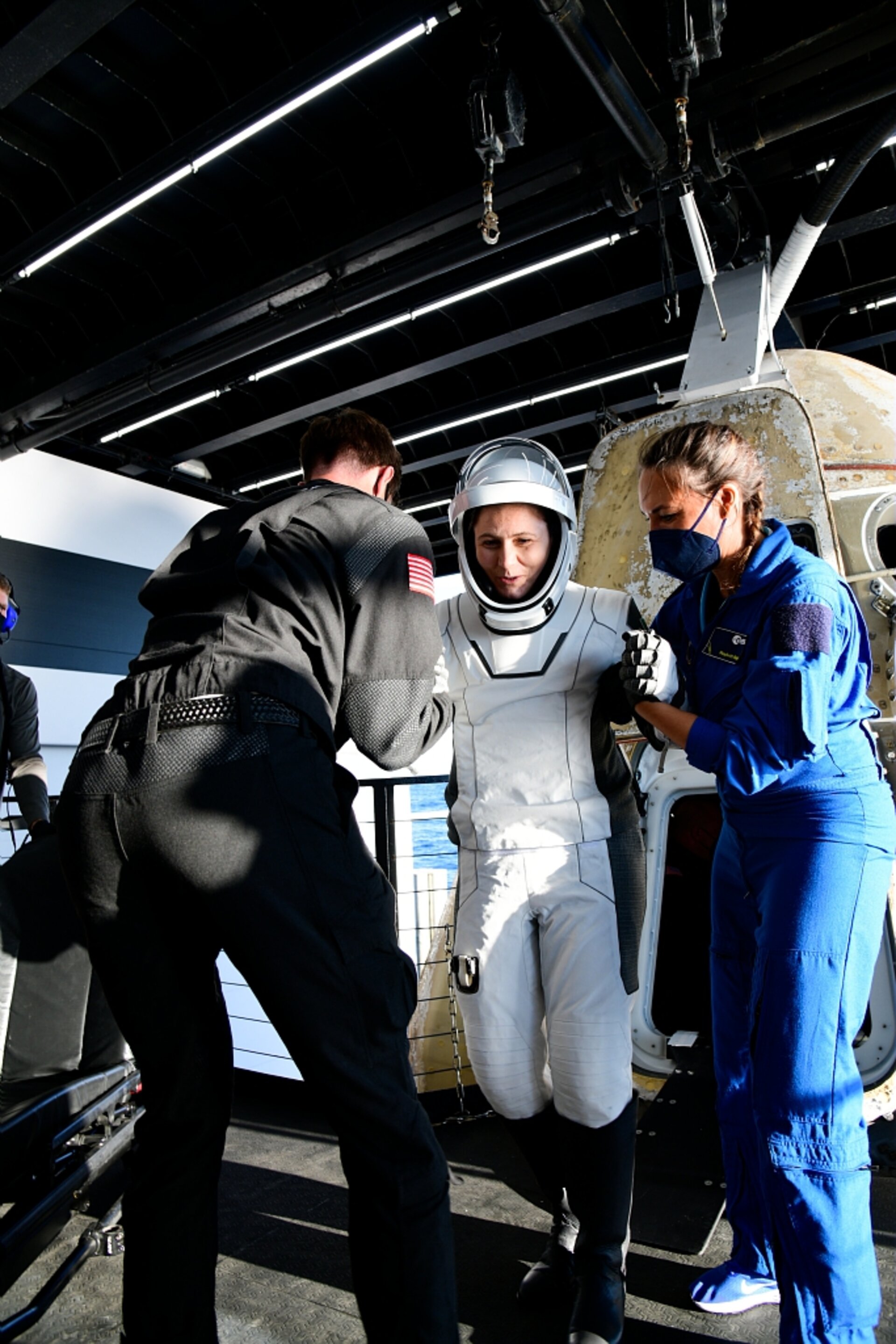
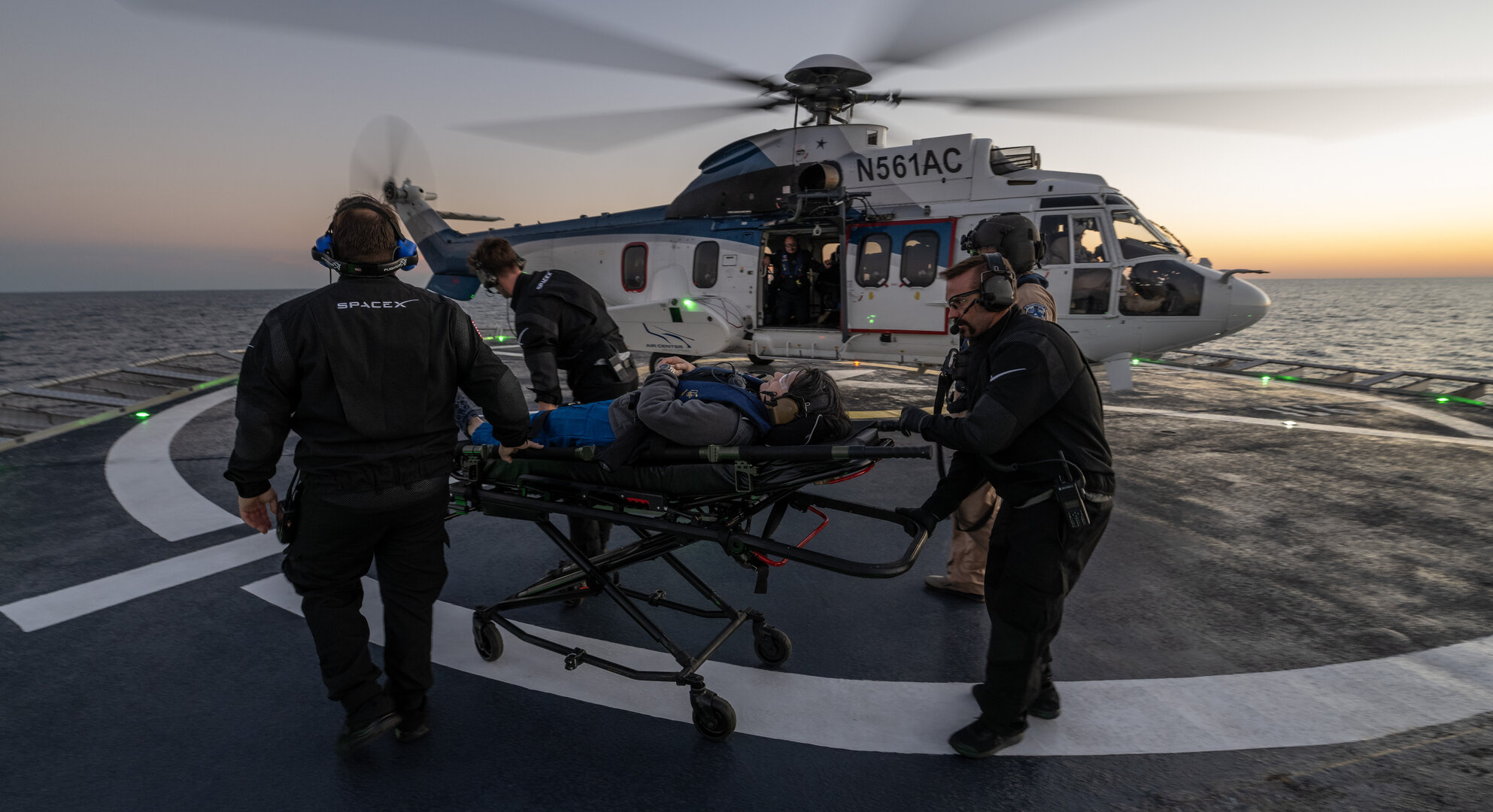
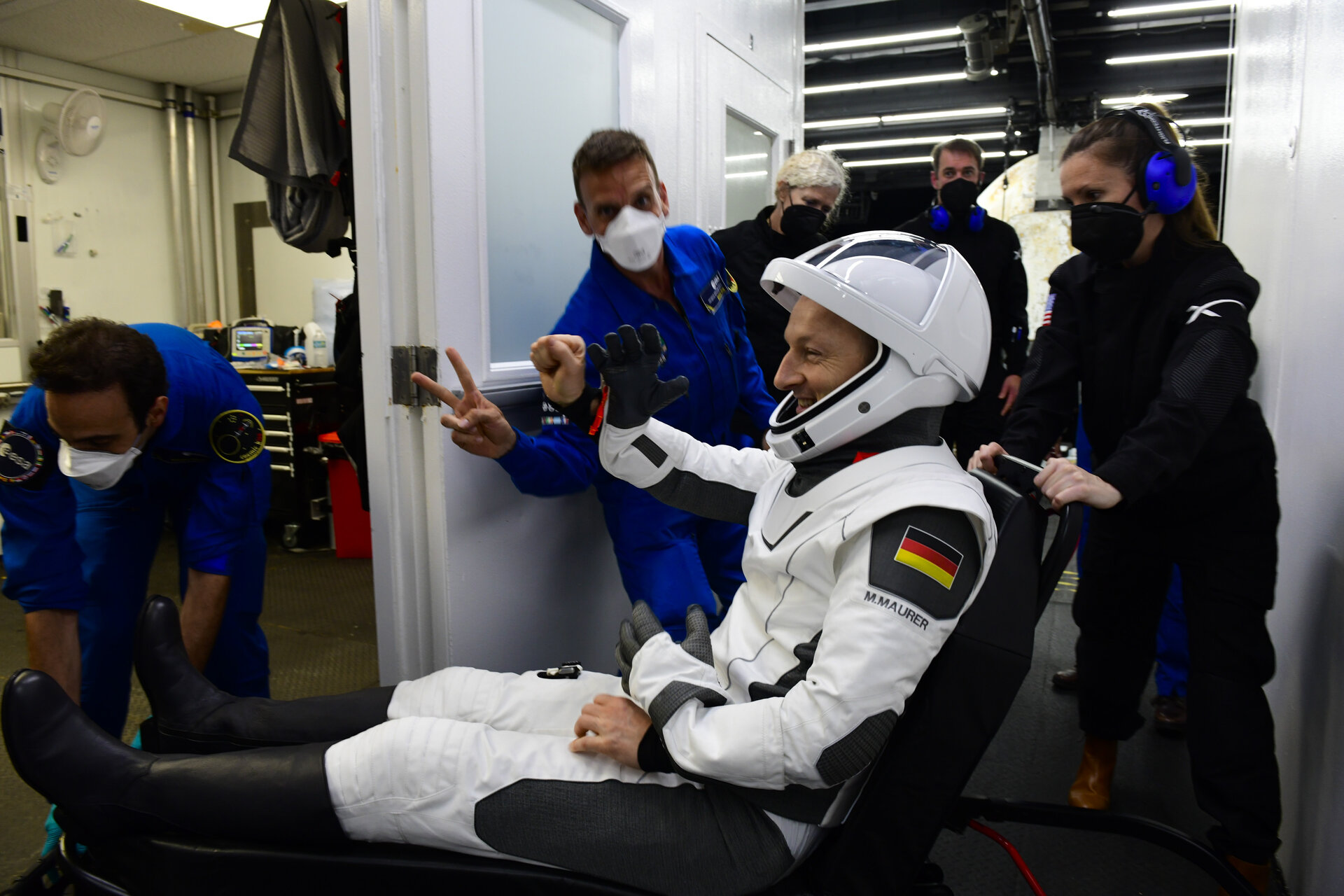
For astronauts returning aboard SpaceX's Dragon spacecraft, the journey back to Earth begins with a splashdown at sea, usually off the coast of California or in the Gulf of Mexico. Following recovery operations and initial medical checks, the crew flies by helicopter back to shore before continuing to a designated handover location.
At this point, responsibility for the ESA astronaut is formally transferred from the mission operator to ESA. From then on, ESA coordinates the astronaut's return to Cologne and their immediate post-flight activities.
Why return directly to Cologne?
The period immediately following a return from space is particularly sensitive, both for the astronaut’s health and for scientific research. Returning directly to Cologne allows ESA to better control the conditions surrounding the astronaut during this critical phase, protecting their health while preserving the integrity of post-flight scientific investigations.
After spending months in microgravity, astronauts experience significant physiological changes and may be more vulnerable during their initial readaptation to Earth’s gravity. Minimising unnecessary exposure to infections and other external factors is essential — an illness could affect the astronaut’s recovery as well as compromise the interpretation of scientific results.

Unlike a regular commercial flight, a dedicated travel allows ESA to tailor the journey to the astronaut’s specific needs. It limits unnecessary exposure to large numbers of people while providing the flexibility required for continuous medical supervision and time-sensitive scientific activities. The flight is also carefully planned to accommodate potential medical emergencies, with suitable diversion airports and hospitals identified along the route to ensure that medical care could be reached as quickly as possible.
These flights are usually provided by the astronaut’s home nation through government or military planes. The hours immediately following landing also offer scientists a unique opportunity to study how the human body responds to Earth’s gravity just after a prolonged period in space. Depending on mission requirements, scientific measurements may begin shortly after landing and continue throughout the journey to Cologne, allowing researchers to capture valuable data during the earliest stages of readaptation.


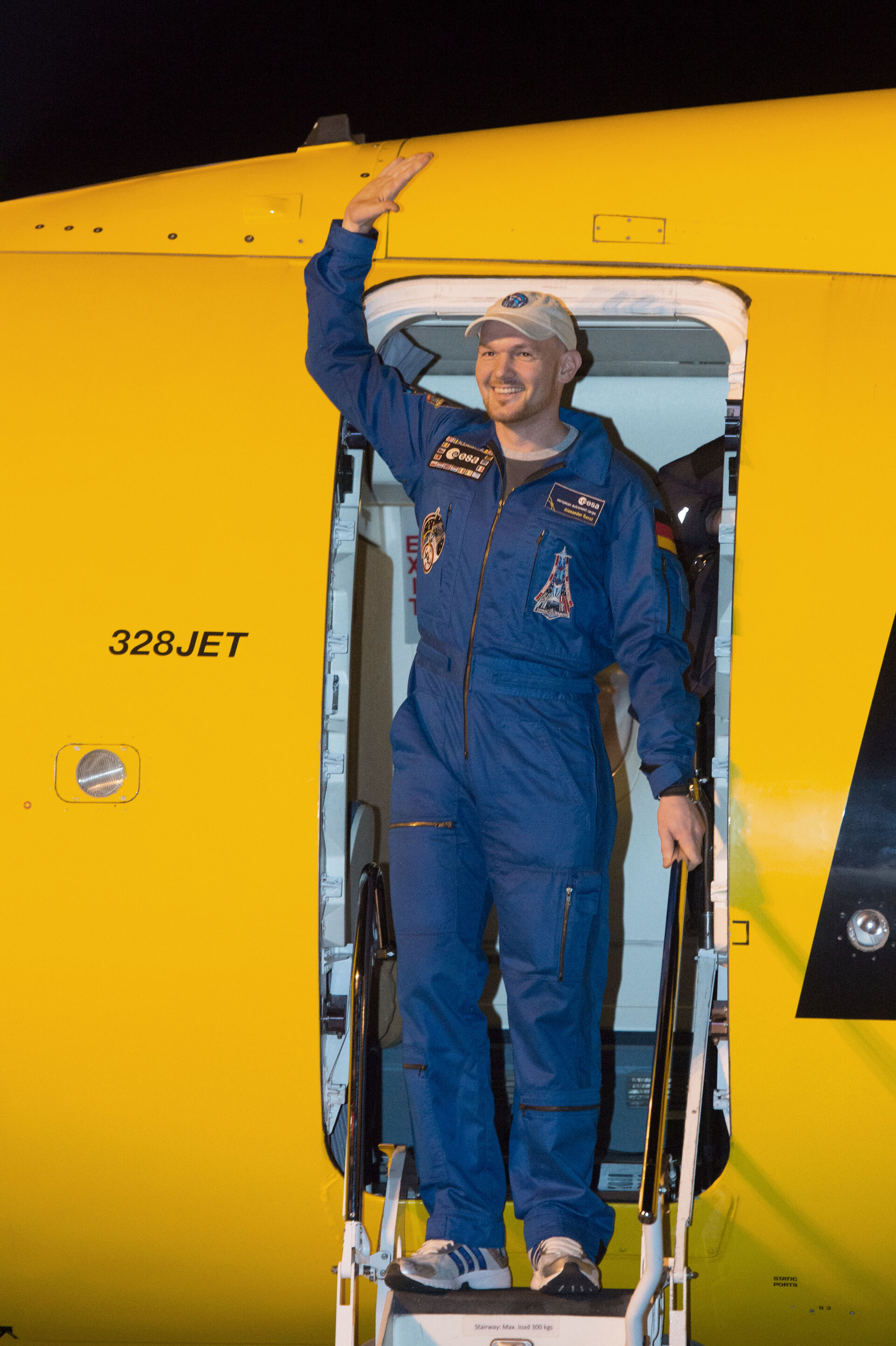
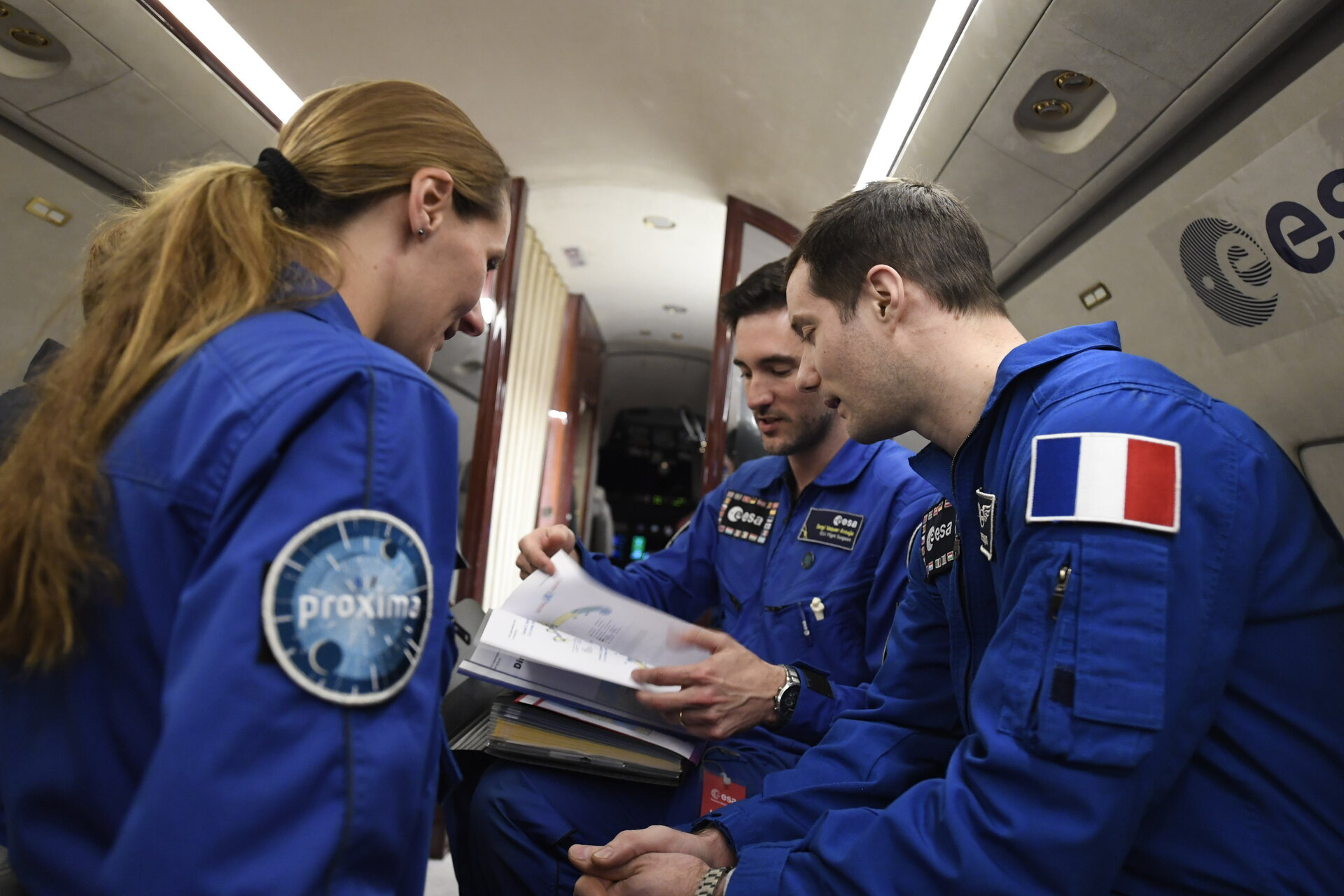

The post-flight phase at the European Astronaut Centre
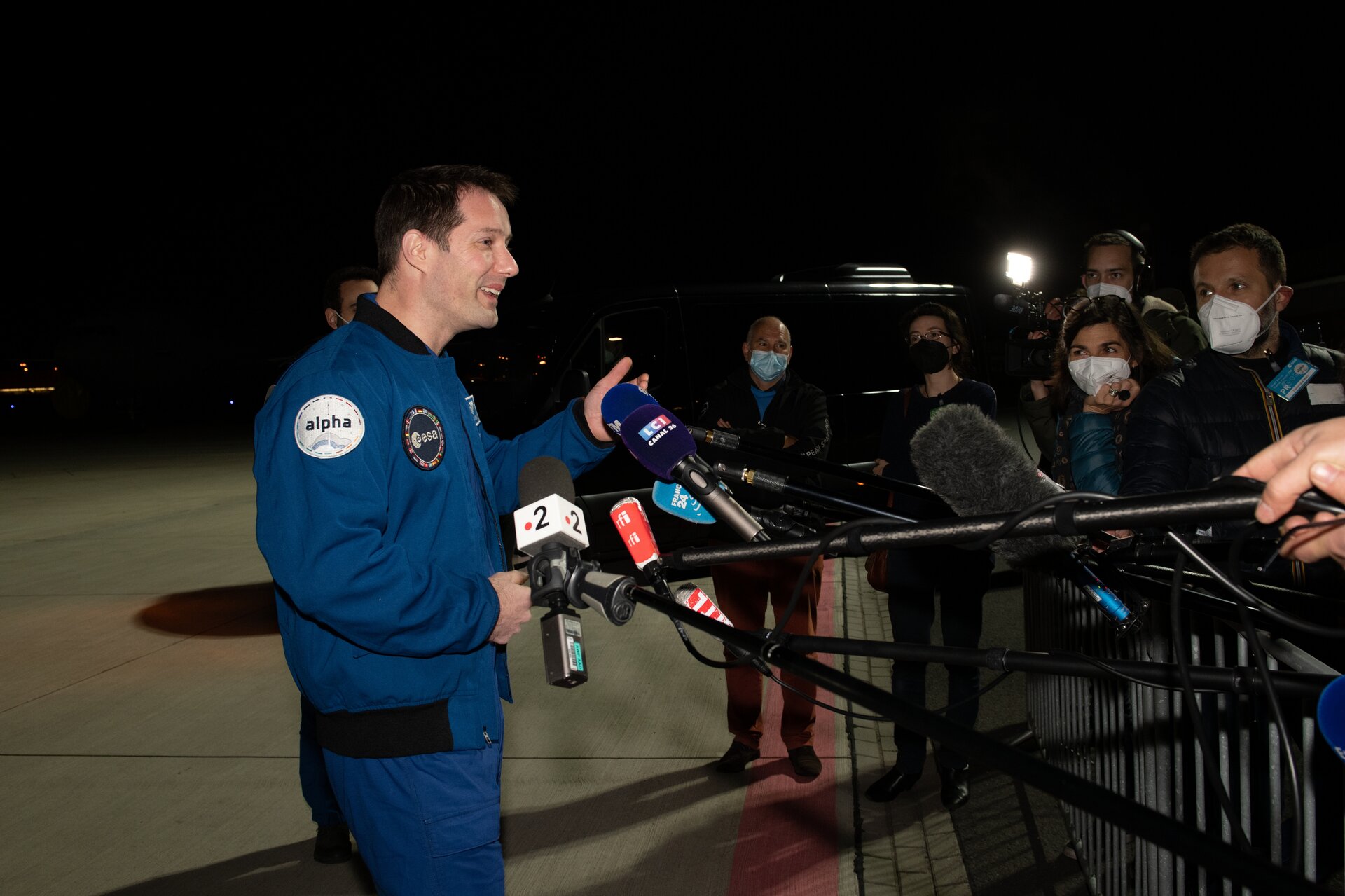
Upon landing at Cologne's military airport, operated by the Flugbereitschaft des Bundesministeriums der Verteidigung (Special Air Mission Wing of the German Air Force), astronauts move to ESA's European Astronaut Centre and the nearby :envihab facility, operated by the German Aerospace Center (Deutsches Zentrum für Luft- und Raumfahrt, DLR). Working closely with ESA teams, the Flugbereitschaft and DLR bring valuable operational, medical and scientific expertise to support the astronaut's arrival, recovery and return to life on Earth.
The process typically lasts around seven days following a short-duration mission, and 15 days following a long-duration one. After that, the EAC training team formally assumes the responsibility for coordinating rehabilitation and follow-up activities.
Turning experience into knowledge
The post-flight phase is not only about physical recovery. Astronauts also take part in operational debriefings, sharing observations and lessons learned with engineers, medical experts and mission teams. At the same time, scientists, physicians and trainers gather valuable data on how the human body adapts to and recovers from spaceflight, contributing to research and the preparation of future missions.
Behind every return is a coordinated effort involving more than 100 people across multiple locations, bringing together a wide range of expertise from across ESA and its partners. While much of this work takes place behind the scenes, every contribution plays an important role in ensuring the smooth execution of successful post-flight activities.
Following their return to Earth and the immediate post-flight phase, astronauts contribute to scientific research and share their experiences with students, researchers, decision-makers and the public through educational, outreach and communication activities.
As one of only four agencies worldwide, ESA has been implementing these returns since 2014, continuously building on the experience gained from each mission. This collective expertise helps refine post-flight operations and prepare for future human spaceflight missions.
This journey is much more than bringing an astronaut home. It safeguards the astronauts’ health, preserves valuable scientific opportunities and transforms the experience gained from each mission into knowledge for the future of human spaceflight.
Thank you for liking
You have already liked this page, you can only like it once!
Published by the European Space Agency. View the original →
What do you make of it?
Nobody has weighed in on this story yet.
Related in the Atlas